Showing posts with label Tunisia. Show all posts

Friday, 17 June 2022

Reducing Single-use Plastic Usage To Help Our Oceans

 As sailors, we are all too aware of the need to reduce our usage of plastics, having seen first-hand the terrible impact on our marine life. Plastic has touched practically every corner of the planet - even in the Cocos-Keeling Islands, we found the windward coast littered with trash. We often saw floating plastic debris when we crossed the Indian and Atlantic oceans, so the problem is real and pressing.

Today, there is an increasing awareness of the urgent need to reduce our dependence on single-use plastics. A recent ban on single-use plastic bags and plastic drinking straws in some countries illustrates this trend. We have made small but important steps on our way to eliminating plastic waste, but we still have a long way to go. 


Furthermore, in many of the less developed countries we have visited, reducing plastic usage is particularly important. Although some great work is being done by various organisations, many countries lack the resources and infrastructure for recycling. Because of this, it is even more important to not add to the growing piles of plastic waste in landfills.


This post describes some of the strategies we have used but this is in no way exhaustive and I would welcome any further comments or ideas!


Essentially our strategy boils down into 3 parts:

  • Minimise usage

  • Recycle and re-use

  • Substitution


I’ll go into each step in turn……


Minimise Usage

If I can’t avoid purchasing an item without plastic packaging, I’ll buy the largest container that fits in our lockers , and repack the contents into smaller containers for immediate use. I do this for bulk pasta, rice, pulses, cooking oil, and even toiletries such as moisturisers and lotions.

Repacking dry goods for short and long term use

In this way, I’m only buying one large container rather than several smaller ones, and where possible, I will re-use these containers when empty.  Which leads to my next step….


Recycle and reuse

If I can find a way or re-using a container or a bag, I will! Many foodstuffs come in sturdy re-sealable bags and I will re-use these again and again to store anything from sandwiches for a passage to flour and powdered milk. Strong plastic bottles work well for storing cleaning fluids (for some ideas on environmentally-friendly cleaning tips, please see my last post!).

Old sauce bottles work well for kitchen use
I'm storing tortillas in this reusable bag


Some countries offer recycling facilities, so where they are available, we make sure we recycle whatever we can.


Finally, we’ve found that some vendors are happy for us to return their packaging to them so they can use it again.

Not only does Mandingo sell wonderful tropical fruits, but he accepts empty bags to re-use. What a legend!

Substitute

The third step is to find an appropriate alternative to plastic, which is the best option as we avoid using plastic at all. Some examples include:


Using multi-use bags when shopping: many people now do this as a matter of course, and we are no exception. Many Caribbean fresh food markets sell their produce in plastic bags, so I bring my own bags to use instead. I’ve had them for many years but they’re starting to look a little worn, so I’m also going to make some more bags out of scraps from my huge fabric stash!


It goes without saying that if we can buy items loose or in a more environmentally friendly package, we will do this. The wonderful medina in Monastir sold all dry goods completely loose, so we could buy oats, beautiful dried fruits and almonds to make our muesli.

No packaging here!


Making your own: by making our own yogurt, muesli etc., we don’t need to purchase them at the store in their plastic packaging.

Making muesli in bulk

Plastic free alternatives: it’s possible to source all sorts of biodegradable personal care accessories, such as bamboo toothbrushes, biodegradable dental floss, laundry detergents and kitchen sponges. We’ve made use of all of these, along with re-usable and washable sanitary products. Even in countries where it isn’t as easy to find such products, there may be local alternatives. For example, we learned from our wonderful OCC Port Captain Martin that coconut coir can be used as a pot scourer and lasts for several months!

Our bamboo toothbrushes - but check carefully if the bristles are also biodegradable

Despite our best efforts, we’ve found that we still can’t completely avoid single-use plastic. There are times when I open a packet of teabags or crackers and discover that every single one comes individually wrapped in plastic (why???!!!)! But by following these steps, we’ve tried to minimise our plastic ‘footprint’ as best we can and I hope that you find these tips useful.


I’d also be really interested to hear any other thoughts or ideas about how others reduce their plastics use - feel free to comment below!


My next article will explain a few ways of minimising fuel and water consumption when I cook so stay tuned.... 


Sunday, 10 October 2021

Monastir to Cartagena

Hi everyone,

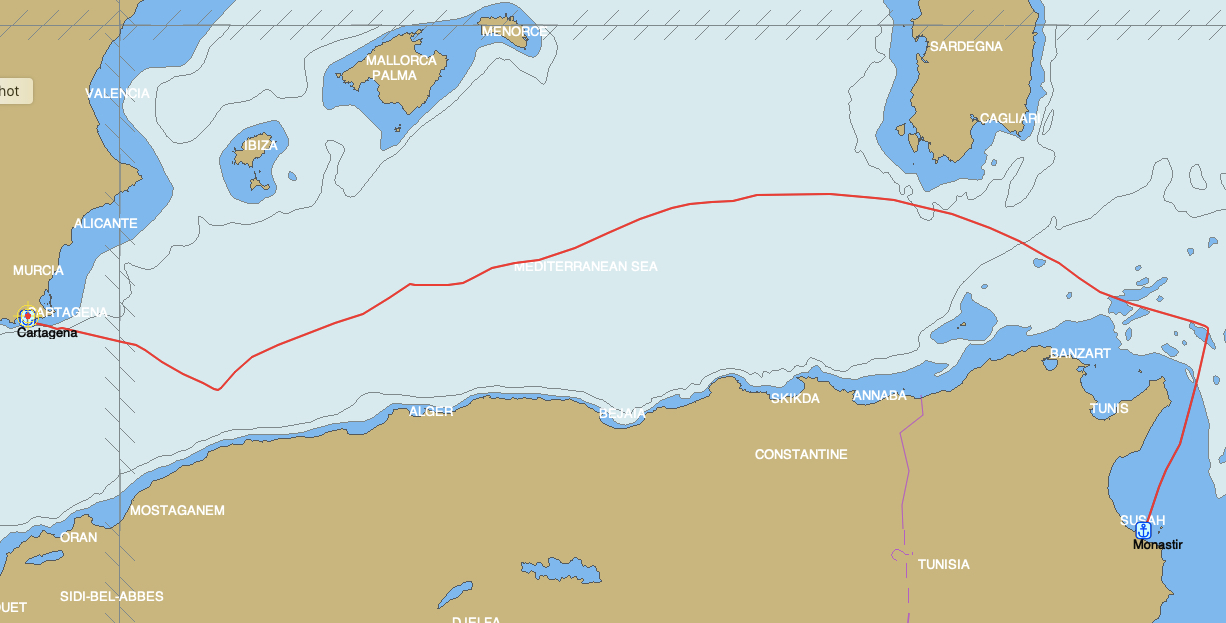
Yesterday we arrived in Cartagena, Spain after a 6 day passage from Monastir, Tunisia.  We now have 90 days in the Schengen area before departing across the Atlantic.

Our nearly 3 month stay in Monastir was great.  Being there over the summer it was hot, sometimes very hot.  We enjoyed Monastir itself and also touring Sousse, Mahdia, Carthage and Tozeur in the Sahara.  The Tunisian people are doing it tough but were always friendly.

Final Tunisian Sunset

Our strategy was to take the first reasonable weather window as we approached our 3 month Tunisian visa expiry and our Schengen re-entry date.  Happily one came along a week before the visa expired and a direct passage to Cartagena would have us arriving on our Schengen re-entry date.

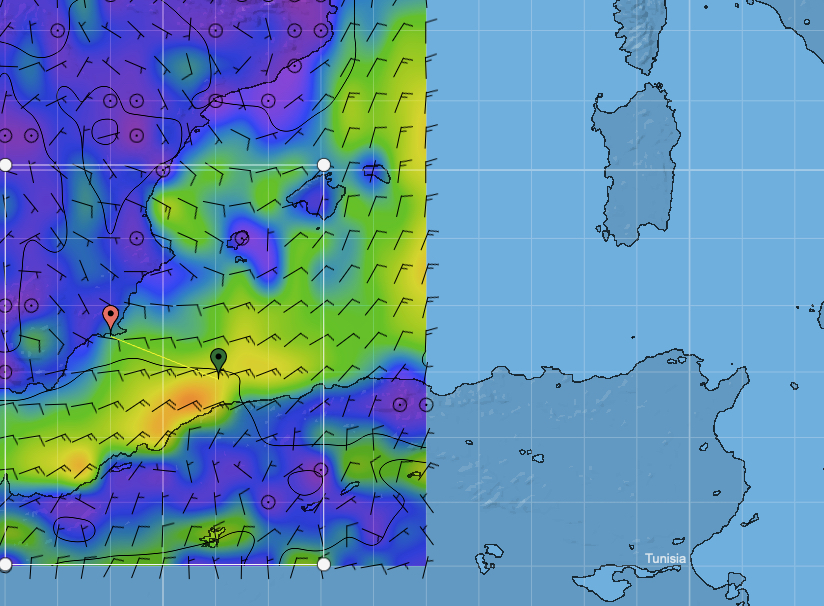
The weather window wasn't ideal but it was OK.  We'd have a nice SSE wind to reach north from Monastir to Cap Bon.  The wind would then die and go around to a light W breeze which we'd have to motor through.  We'd motor to get far enough W to ride the western side of a Mistral N wind coming down from France.  We'd sail out of the Mistral into light airs and have to motor until an E wind along the African coast took us home.  There are a set of GRIB weather files below.

Here are the plots...

Overall Track

Arrival Track

Graphs


And here are the vital stats for the passage…

    • Distances/Speeds
        • Route Distance = 710nm
        • Logged Distance = 749nm (log now calibrated via SignalK!)
        • GPS Distance = 752nm
        • Duration = 6d5h (149 hours)
        • Average speed over ground = 5 kt
        • Minimum boat speed = 3 kt
        • Maximum boat speed = 8 kt
    • Weather
        • Minimum wind speed = 0 kt
        • Average wind speed = 8 kt
        • Maximum wind speed = gusts to 31 kt
        • Apparent wind angle range = 0 to 150
        • Seas up to 2m
        • Swell up to 1.5m
        • Everything from calm & sunny to squally and rainy!
    • Engine
        • Total = 67 hours (45% of passage)

Departure from Tunisia involves Garde Nationale, Police and Customs authorities.  We first had to arrange a departure time with the Garde Nationale, at least 24 hours in advance.  On the day of departure we then had to visit the police and customs to have our passports stamped.  Customs retained the passports until the Guard National was ready to escort us out,  Then customs came aboard to check our equipment list and look for stowaways immediately before we sailed.  On departure we were escorted by a Guarde Nationale RIB to the 12nm territorial limit.  It took all morning to complete the process, finally departing at noon on Sunday 3rd October.

Departing with escort

We had a great sail north along the Tunisian coast.  Beyond Cap Bon the breeze and fetch made it a rapid but rolly ride.  We zipped across the traffic lanes before gybing west.  In the following PredictWind GRIBs the green dot shows our approximate location at the time.

3 October - nice SSE breeze to start

On Saturday the wind gradually died until at 1445 the engine went on.  It stayed on for 42 hours.  We had to push the engine hard at 2000 rpm to get through an unexpected left-over W swell of 1.5m.  Twasn't much fun.  So glad we spent three sessions in the marina water scrubbing the hull and our Brunton's AutoProp clean.

Eventually the swell subsided and the motoring became easier.  We pushed W to ensure the coming Mistral would be on our beam and not on the nose!  On Monday night a large thunderstorm passed from S to N with enormous bolts of lightning around us.  Happily none touched down close but it's never a relaxing experience!

5 October - light W winds S of Sardinia

Sunset over a silky sea

The Mistral came in as predicted and we had a great beam reach from SW of Sardinia to S of Minorca.  The leading edge of the Mistral had squally conditions and we were caught out by one of them.  A rapid yankee furl and mainsail reef sorted that out, with a free freshwater wash thrown in for both of us.

7 October - riding the W side of the Mistral

Squalls disappearing to leeward

As we reached out of the Mistral the wind gradually faded until eventually we were motoring again.  Along the way an owl flew by and inspected us - what it was doing in the middle of the Med only it can say, it did look a little confused.  We transferred 40 litres of diesel from jerries to the main tanks since the two days of hard motoring had used most of the roughly 120 litres in our tanks.

At sunset on Thursday Nicki saw the green flash.  We've now seen it several times each.  We motored for most of Thursday night, but this time at a much less frantic 1500 rpm across an almost smooth sea.

Tiny hitchhiker

On Friday morning we had a dolphin escort.  It's always a highlight when they come along to play.  
The night sky was amazing throughout the passage.  There was a tiny sliver of waning moon on Monday morning and another tiny sliver of new moon on Friday evening.  Otherwise no moon at all.  Jupiter and Saturn were very bright.  We saw a couple of satellites and a number of shooting stars.  The app GoSkyWatch reminded us of the constellations.

Sailing West

Friday afternoon gave us 'champagne sailing' conditions.  It reminded us of trade winds sailing in the South Atlantic.  Nice to know the Med can occasionally deliver perfect sailing.  As they say the Med is often 'motoring between storms', but once in a while there _is_ great sailing.

By Friday night we were closing the North African coast, taking advantage of the predicted breeze there.  When we found ourselves getting into the shipping lanes and close to some offshore platforms we gybed north towards Cartagena.

8 October - riding the wind on the African coast

On Saturday the wind died as we sailed WNW.  Eventually the motor came on again and we donked along at 1500 rpm to Cartagena.

Dodging traffic on approach to Cartagena

Entering Cartagena port

On arrival in Yacht Port Cartagena the marinaro guided us to our pen where we Med Moored (with 'slime lines' not anchor), perhaps for the final time.  We're getting pretty good at the manoeuvring required.

Today (Sunday) we spent the early morning cleaning up the boat.  The headsail sheets were stiff enough with salt for a 2m length to stand upright.  Then we visited the office and found no Covid tests were required for crews of boats under 25m.  We expect to have our passports stamped by Customs tomorrow morning when their office will be open.

We'll be spending a week or more here in Cartagena.  We have several packages en route to us here.  Next stop is likely to be the 250nm to La Linea (close to Gibraltar).  From there it'll be onward to Madeira which will be shorter than this passage!

Saturday, 11 September 2021

Tunisia Road Trip

Hi everyone,

Last week we hired a car to tour inland parts of Tunisia.  We did 1200km over 3 days visiting towns, oases, Star Wars sets and a Roman city.

Into the Sahara

On day 1 we drove from Monastir south to Matmata and Tamazret, an area famous for its 'troglodyte' Berber houses, then onward to Tozeur via Chott el Djerit the Sahara's largest salt pan.  On day 2 we were taken around a series of magnificent locations by Ahmed of The Soul of Sahara on his 'Hardcore Tour'.  On day 3 we returned to Monastir via the Roman ruins at Sbeitla.

GoogleMaps view of our route (ignore the 'inside track')

The drive south from Monastir to the outskirts of Gabes was easy on the A1 motorway.  Along the way there are miles and miles of olive groves.  The country slowly becomes drier as one heads south.  Beyond Gabes the roads are single carriageway and the agriculture stops.  The hills are spectacular and every gully is dammed to capture every last drop of run-off.  Upstream of each dam isn't a lake but rather a flat patch of farmland.

The Berber people of this area are famous for their houses carved out of the hills.  The houses are spread all over the landscape, presumably one on each family's land.  From a distance one sees either the doorway or the void above their courtyard.

Downstairs (below ground) and Upstairs (above ground) accommodation

Dammed gully with multiple field/dam pairs

We drove straight through Matmata which appeared quite touristy.  It took us a while to convince a guide on a moped that we really didn't want to stop in the town.

Terraced hillside outside Matmata

From Matmata it was a short drive to Tamazret where we visited the Berber Museum.  It's an example of a 'troglodyte' house, being carved out of the hillside as are most of the houses around it.

View over Tamazret

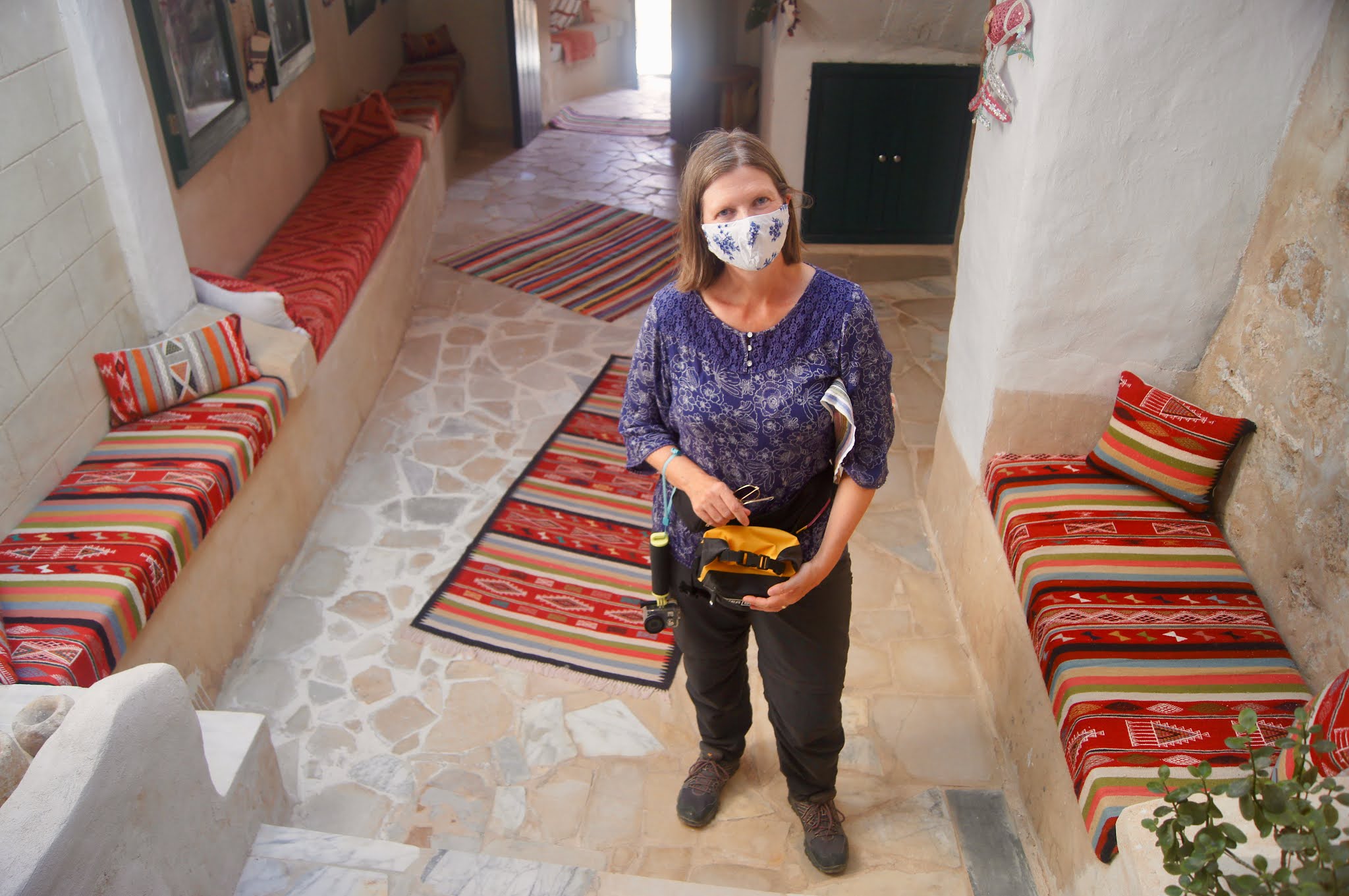
Inside the Berber Museum

Bedroom

Living Room

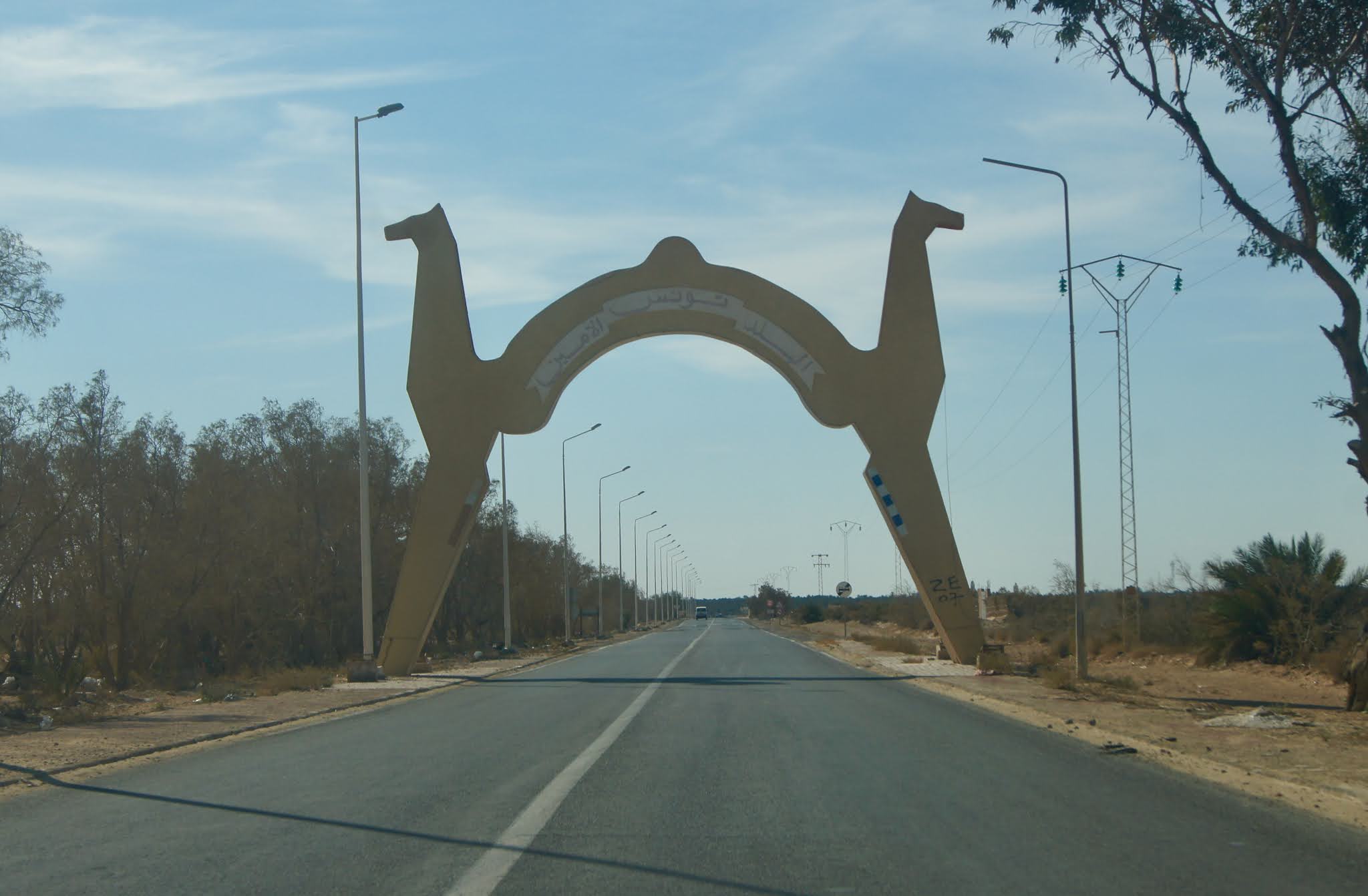
From Tamazret we drove westward.  Many Tunisian towns have arches over the roads leading into them.  Various themes from Camels to Forts.

Many Tunisian towns have arches over the roads in/out

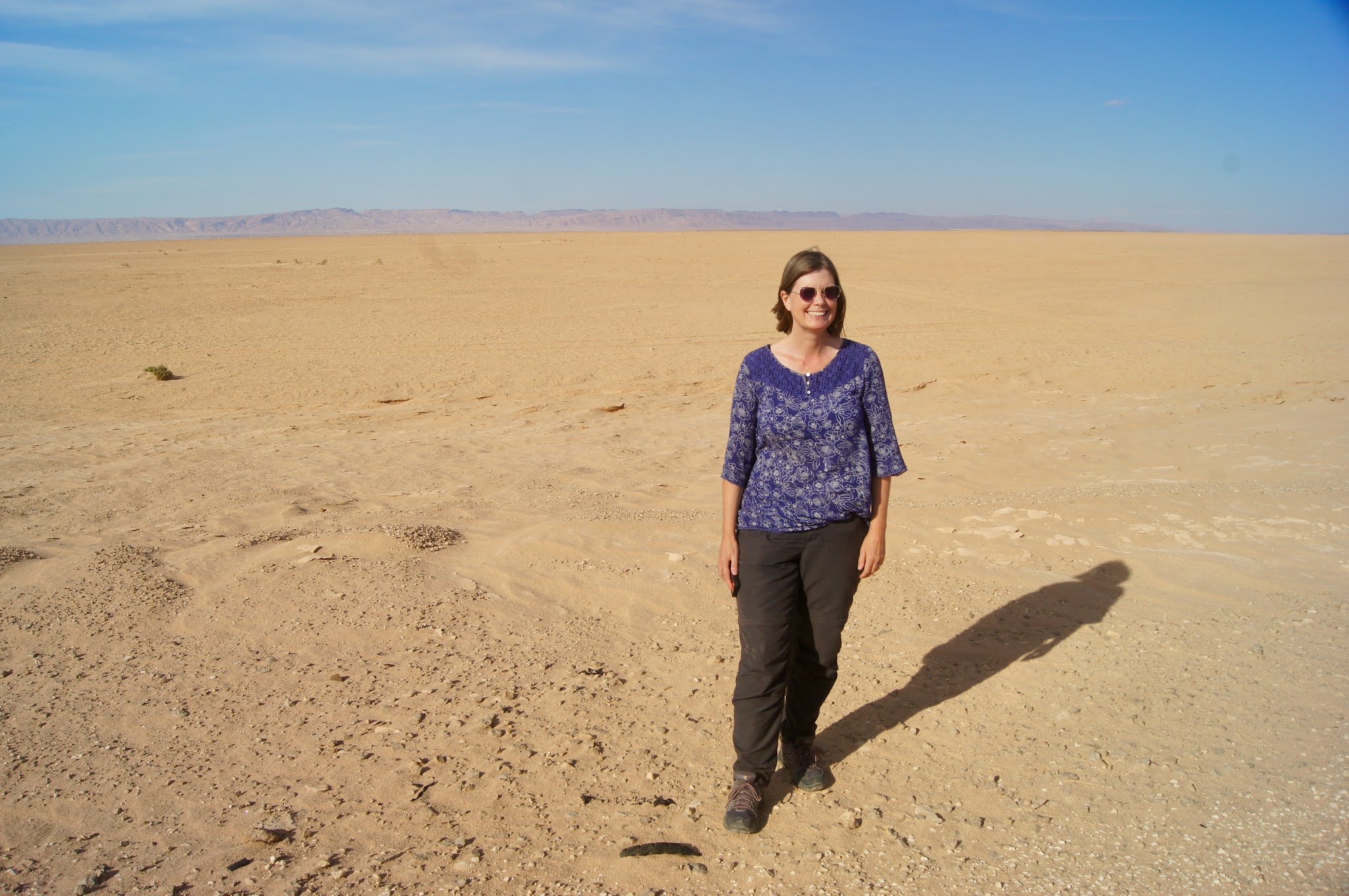
It was obvious when we'd reached the Chott el Djerit salt pan.  Mile after mile of flat sandy surface with no vegetation.  We noticed one or two channels dug into the pan with standing water.  It seemed the water level was about two meters below ground.  Along the road there were several sites which were clearly for people to swim and eat/drink when the lake is full.  Apparently the water can have many colours.

Chott el Djerit salt pan with Atlas Mountains in the distance

We arrived in Tozeur and found our hotel.  It had been a long but amazing day.

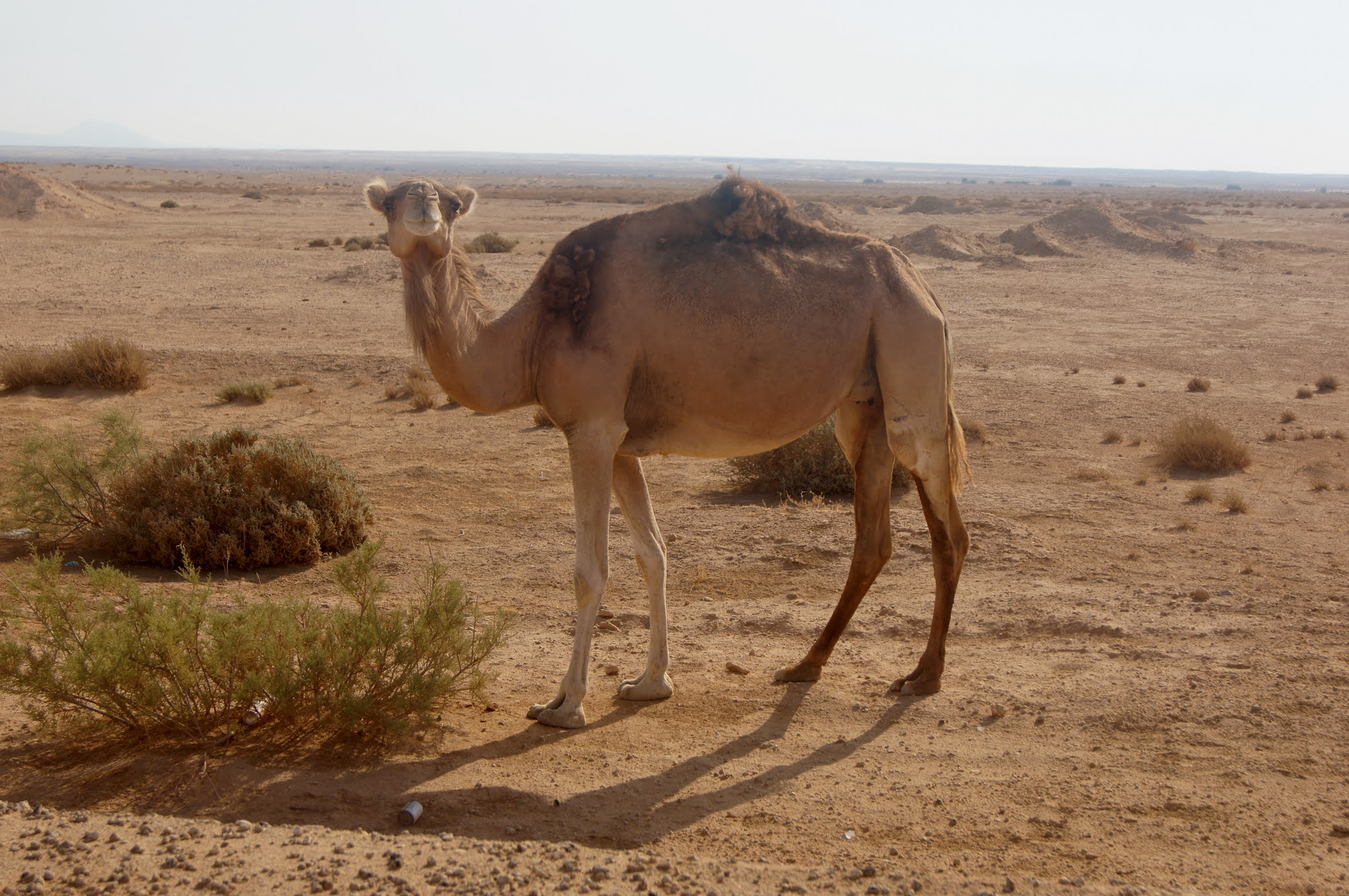
On day 2 Ahmed came to our hotel at 0800 and we set off in the hire car for our HardCore Tour.  First we drove north from Tozeur into the mountains.  Along the way we came upon several herds of camels, some crossing the road.

Camel Crossing sign

Camel hoping to cross

Camel crossing!

We also drove through villages surrounded by date palm groves.  The groves are irrigated.  Apparently there are hundreds of types of date palm.

Date Palms ready for harvesting

Date Palms

The Atlas Mountains run from Morocco to Tunisia.  North of Tozeur there are several ranges.  Ahmed took us up one which has a road to access a Phosphate mine.  The mountains are barren and steep with rocky outcrops.

Into the Atlas Mountains

View from the top

OK, nearly the top

From the mountains we drove back down to the plain and along to the western end of the range to Chebika Oasis.  Chebika is an old village sited below a water course emerging from the mountains.  There's a waterfall and the water runs all year.  The water flows into the oasis which has a well irrigated date palm grove.

Approaching the Oasis

Irrigation channel in the Oasis

Yep, the water comes from the mountains

Chebika is a popular tourist spot.  Due to Covid we were almost alone.  Apparently the only tourists coming here at present are the occasional yachtie and coach loads of Russians.  There are plenty of tourist trinkets.  Most interesting are the fossils and geodes.  Fossils because the mountains are made of ancient sea bed.  And geodes are rocks containing sparkling crystals.  From the outside they're normal but once split in two their inside is amazing.  And amazingly cheap here!

Rocky tourist trinkets

Colourful scarves

The original town of Chebika was abandoned 20 years ago when a new village was constructed nearby with modern facilities.  The old village is on the hillside above the new.

Old Chebika House Door 

View over old Chebika to the new village

From the old village we walked to the waterfall.  Amazing scenery and a quick face wash from the pool was very refreshing.  Twas only a few inches deep but the water was running through the pool and down towards the village and the palm grove, even at the end of a long hot summer.

Chebika Oasis

Chebika

Following the water course

Chebika waterfall

From Chebika we drove west through the town of Tamerza to Mides oasis near the Algerian border.  The old town of Mides is impressively sited.  It has deep canyons on two sides.

Tamerza old town - abandoned in 1969 after sustained flooding

Algeria/Tunisia Border Post

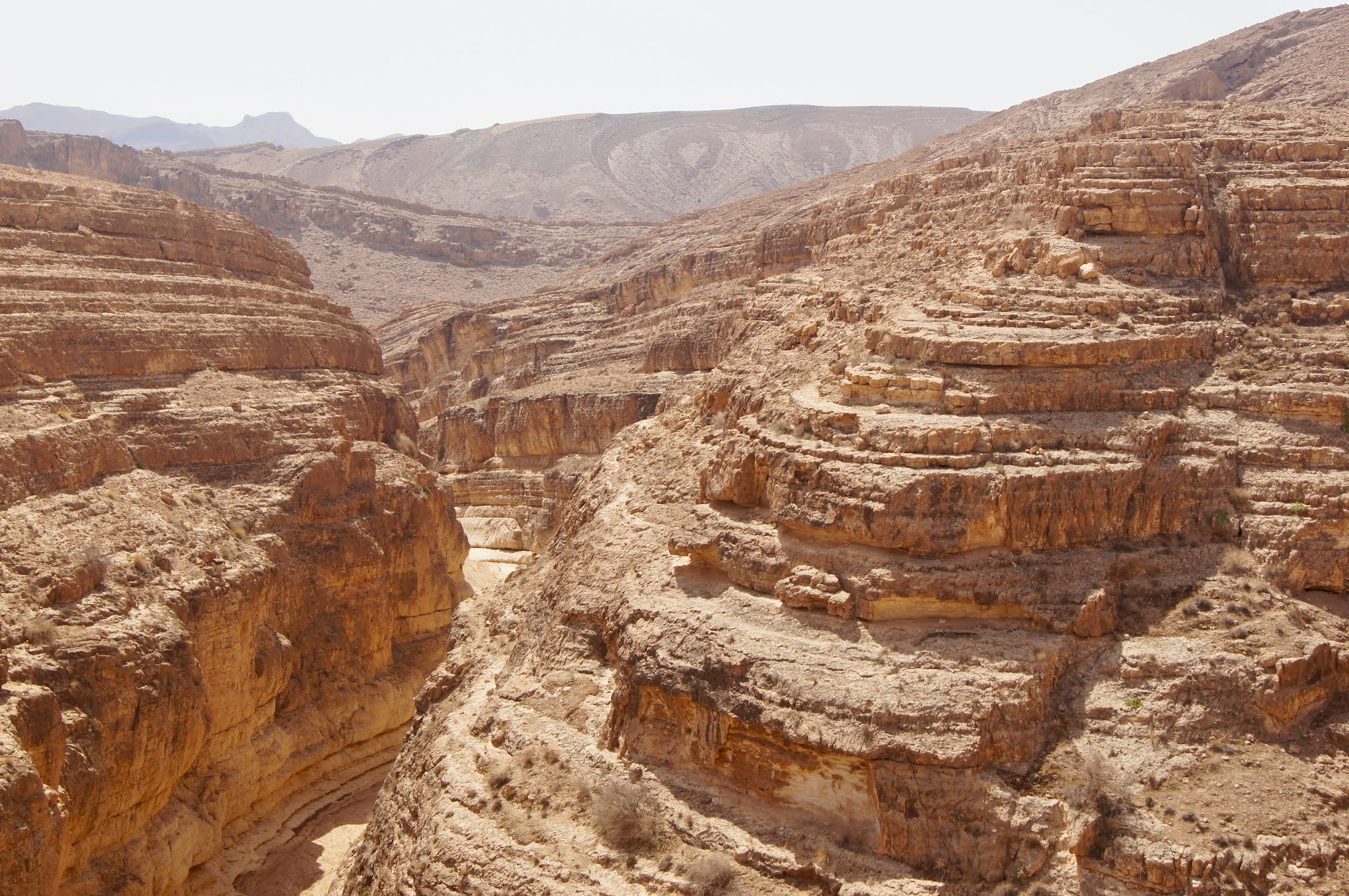
Mides canyon

Mides old town street

Old town above the canyon

Dammed farming area on other side of Mides, with date palm grove beyond

More of the canyon network

From Mides we drove back through Tamarza to Tozeur for lunch.  The road follows the water course from the mountains north of Tamarza to the salt pans near Tozeur.  There are a number of waterfalls along the way.  No doubt they're larger in winter and very impressive in flood!  They reminded us of the Kimberley.

Waterfall downstream of Tamarza

Flood valley

Cafe above the waterfall

Another waterfall downstream from Tamarza

Flood valley downstream of another waterfall

As we drove into Tozeur Ahmed stopped at a butchers.  We knew it was a butchers because there were sheep and camel heads hanging outside.  Ahmed bought the 'best bits' of a fresh camel and took us to a local cafe where the meat was barbequed.

Tozeur market

Camel Ribeye Steak for lunch

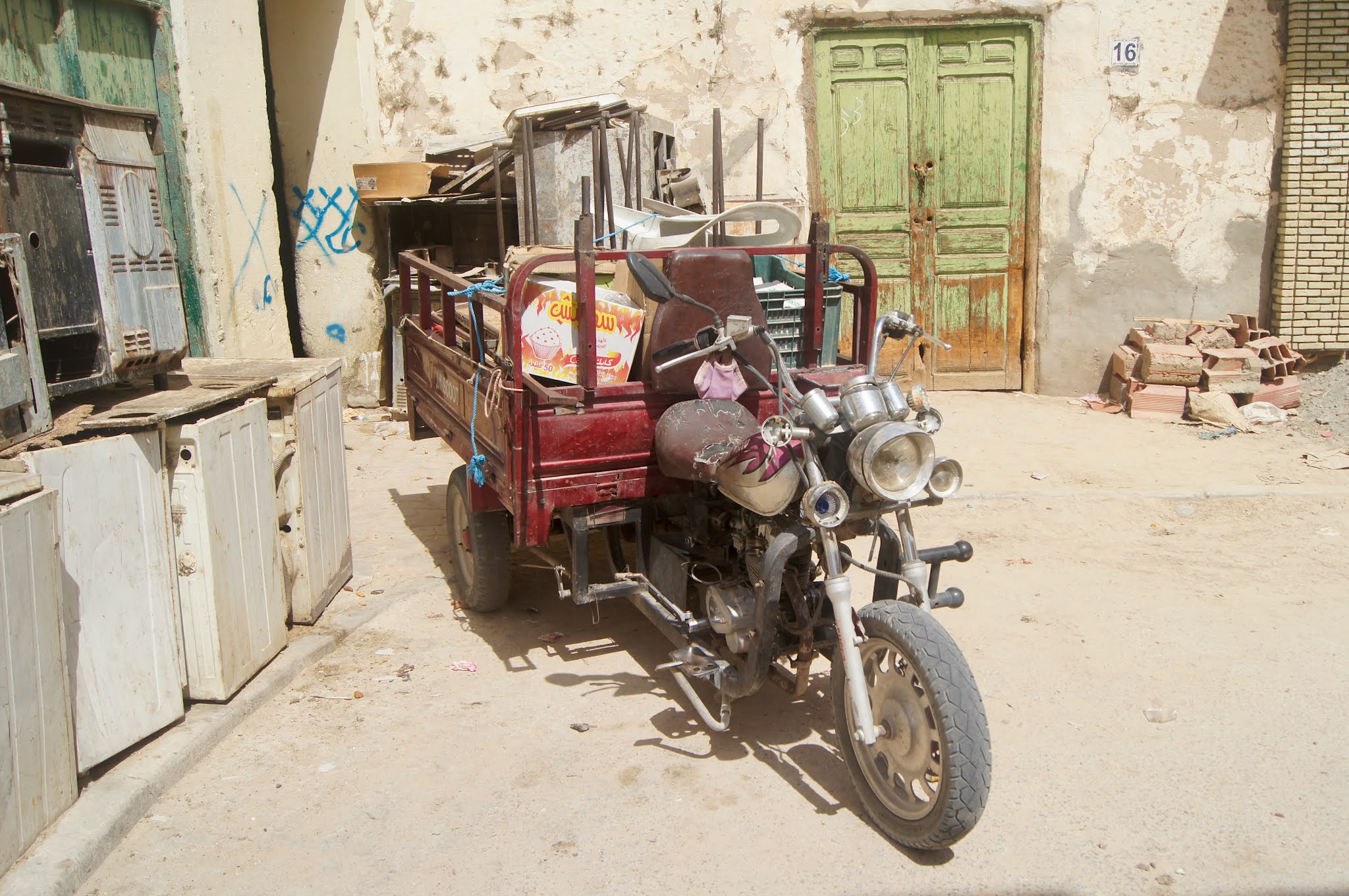
A Tunisian 'Ute'

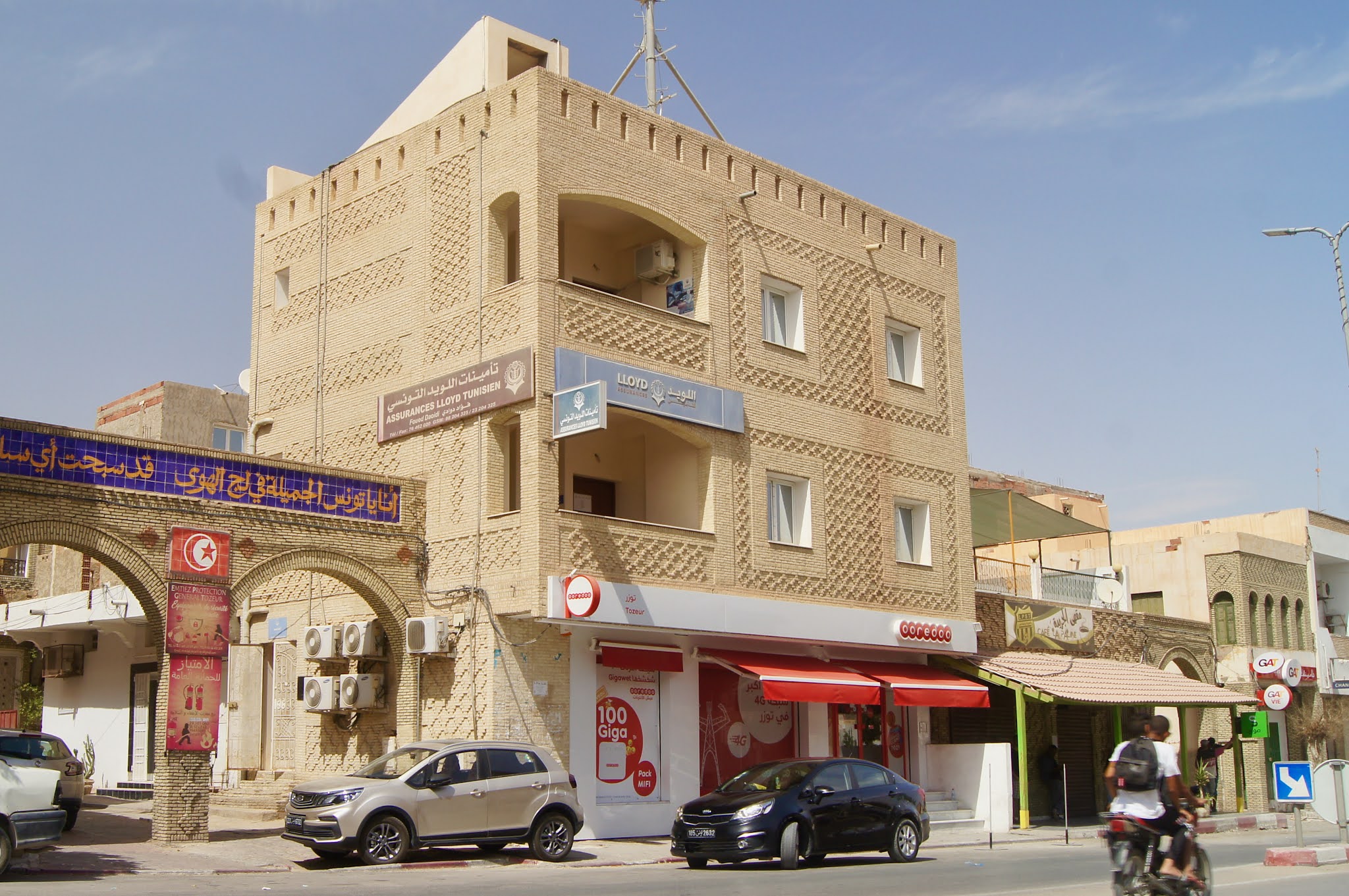
Tunisians love their fancy brickwork

After lunch we drove west to Nefta.  There's a large reservoir in the town which feeds the downstream date palm groves.  

Nefta Reservoir

Nefta

From Nefta we drove north towards the Chott el Rharsa salt pan.  This road was covered by sand in places but not deep.  I reckon Ahmed put on a little show of checking the sand's depth and gunning the car across it.  Having driven around the Pilbara in the 70s and 80s I can say Tunisian roads are similar or better!

A small sand patch

A Sahara Dune!

On top of the dune
Ahmed insists "it's Tunisian so it's white"

Sand sculptures on the dune

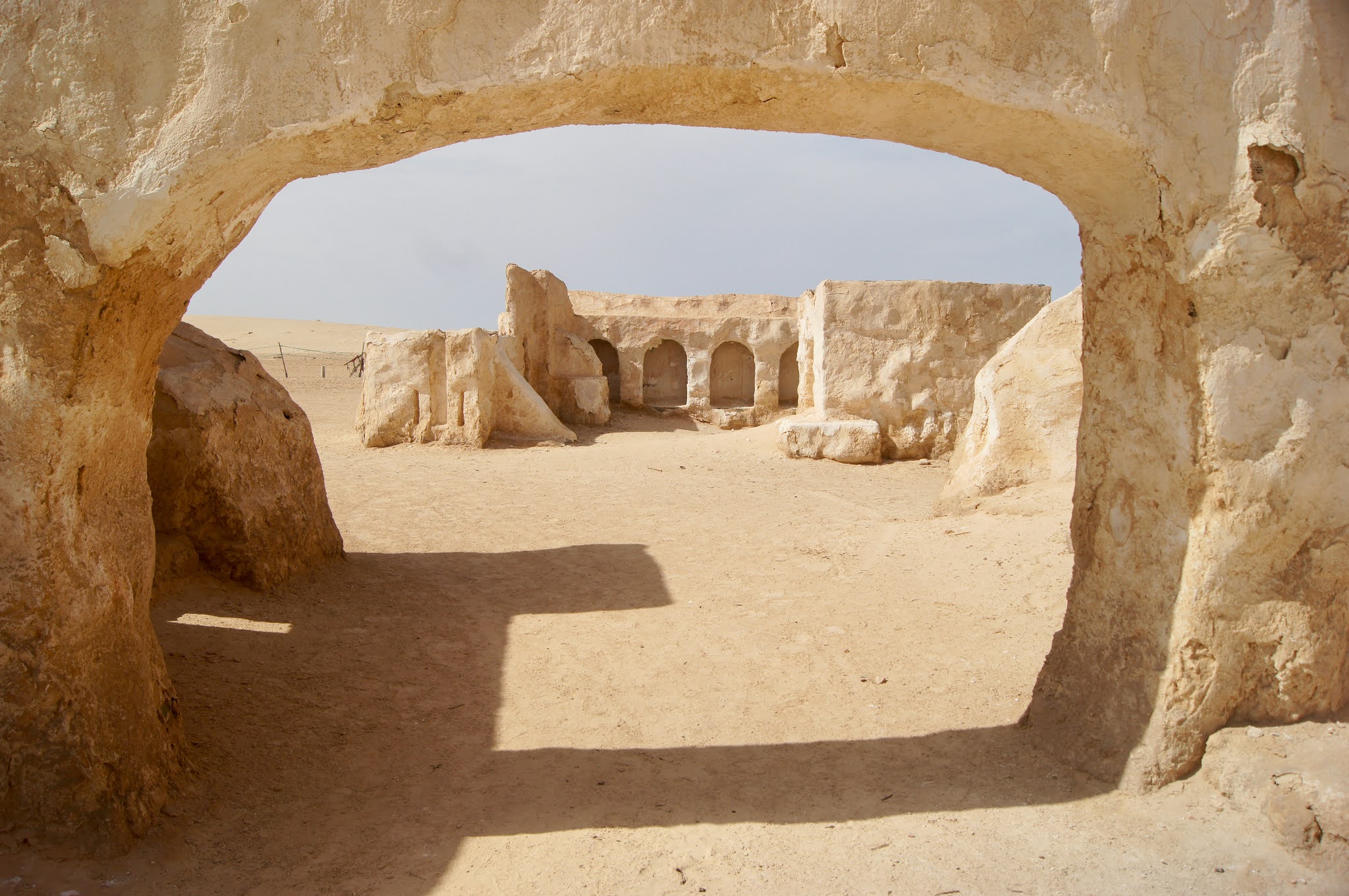
The dune we explored is adjacent to Ong Jemal, home to the Star Wars set of Mos Espa 'on the desert world of Tatooine'.

Star Wars set from the dune

Inside the set

Other-worldly structures

Where are the aliens?

In Tunisia there's always a camel

The sand will win

Behind the scenes

From Ong Jemal we drove back to Nefta and west to the western tip of the Chott el Djerid salt pan.  Here we found a smaller Star Wars set - the entrance dome to Luke Skywalker's homestead.  When we approached the entrance an amazingly colourful bird flew out.  Greyish with other-worldly bright orange crest and white patches.  We reckon is was a Eurasian Hoopoe.

Star Wars entrance dome

From Star Wars it was back to Tozeur and our hotel.  What a fantastic day.  Worth every Dinar.  Thanks again Ahmed and The Soul of Sahara. We hope many more tourists visit Tozeur soon.  Ahmed also introduced us to Taureg musicians Tinariwen - awesome accompaniment to any North African adventure!

One of many horse and carts seen all over Tunisia

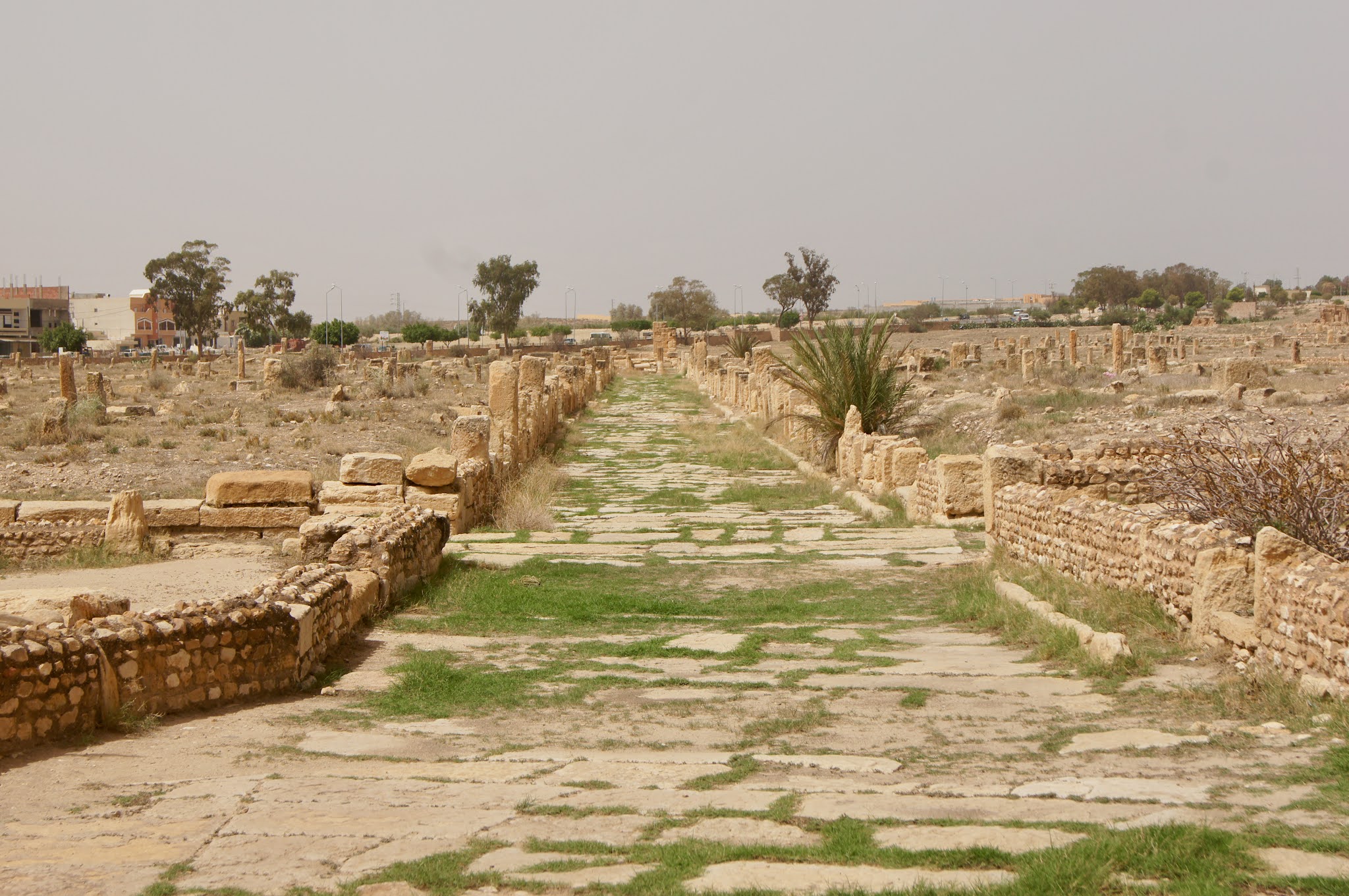
On day 3 we drove back to Monastir via the Roman ruins at Sbeitla.  The ruins are amazing and cover at least a square kilometre.  There is a large entrance arch, an entire town site with streets of shops and dwellings, a set of temples, churches, baths, gym and theatre.  Most of the ruins date from Roman times, with alternations and additions during Byzantine times (eg the churches).

Entrance Arch

View over the ruins with temples in the background

Donkey/Camel-drven Olive Press

Amazing mosaiced bath

Shop-lined street

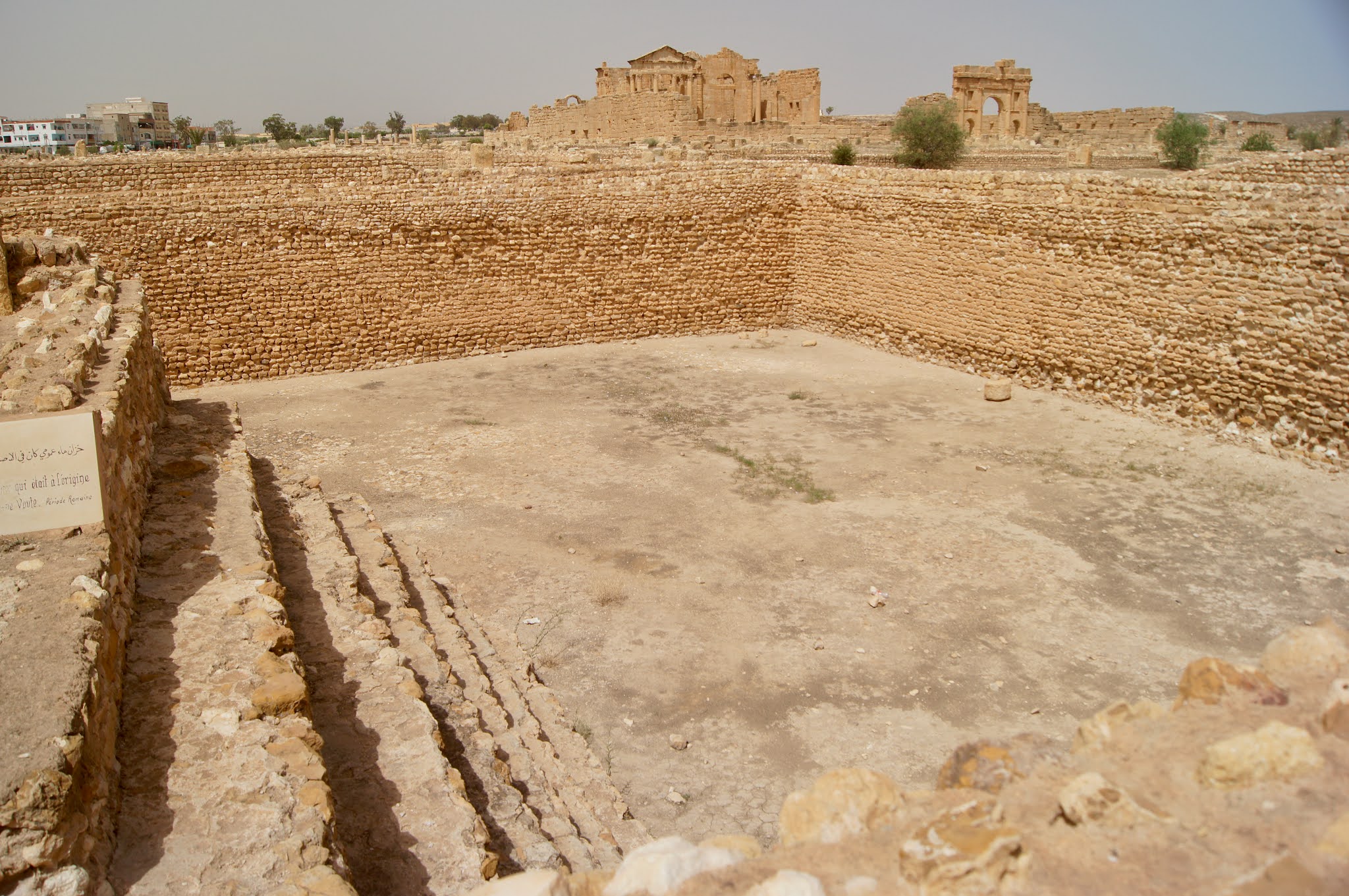
Water storage cistern

Byzantine churches

Baptismal Font

The road toward the temples

Approaching the temple complex

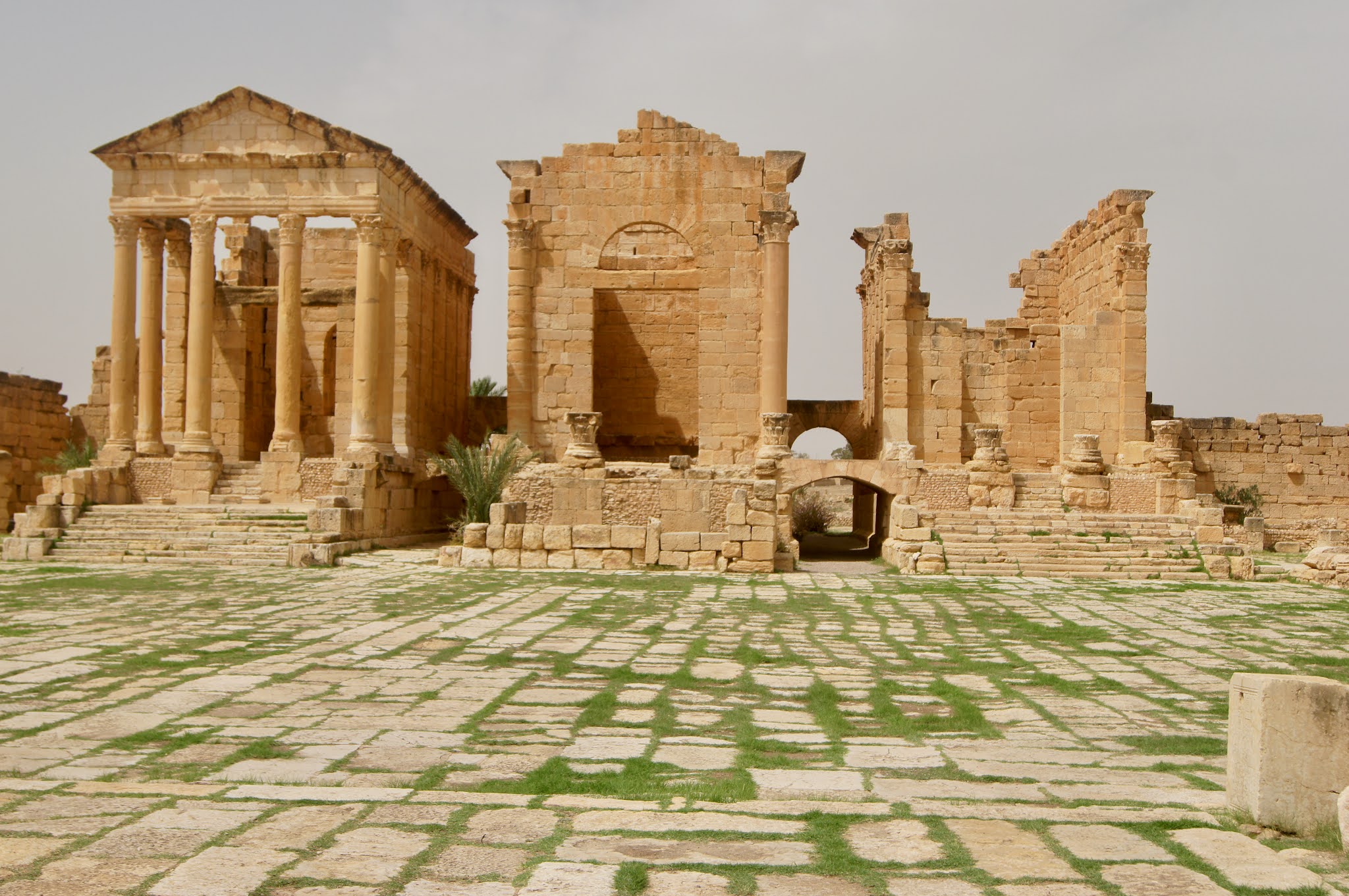
Temples to Juno, Jupiter and Minerva

Inside one of the temples

Dwelling-lined street behind the temples

Another font

Bath

Baths Foyer

Tree of Life mosaic

The rules of the gym (apparently)

Hot bath heating system

On the throne!

Theatre (no lions here)

The drive back to Monastir from Sbeitla was on busy single carriageway roads until we approached the coast and dual carriageways appeared.  The single carriageways were hectic with everything from horse'n'carts to heavily laden trucks to 4WDs to Porches.  There was a lot of crazy overtaking going on.  Someone must have got it wrong and we had a lengthy detour around a crash.

Our Saharan Road Trip was fantastic.  Here's what it cost...
  • Hire Car TND240 for 4 days including extra day to cover excess km
  • Petrol TND150
  • Hotel TND160 for two nights
  • Day Tour TND300 worth every Dinar - we'd not have found many places without a guide
  • Food TND100
  • Trinkets/Tips TND100
With our big adventure behind us we're now thinking about our departure from Tunisia.  We'll be here in Monastir for another two weeks.  Then we'll be looking for a good weather window to sail away!